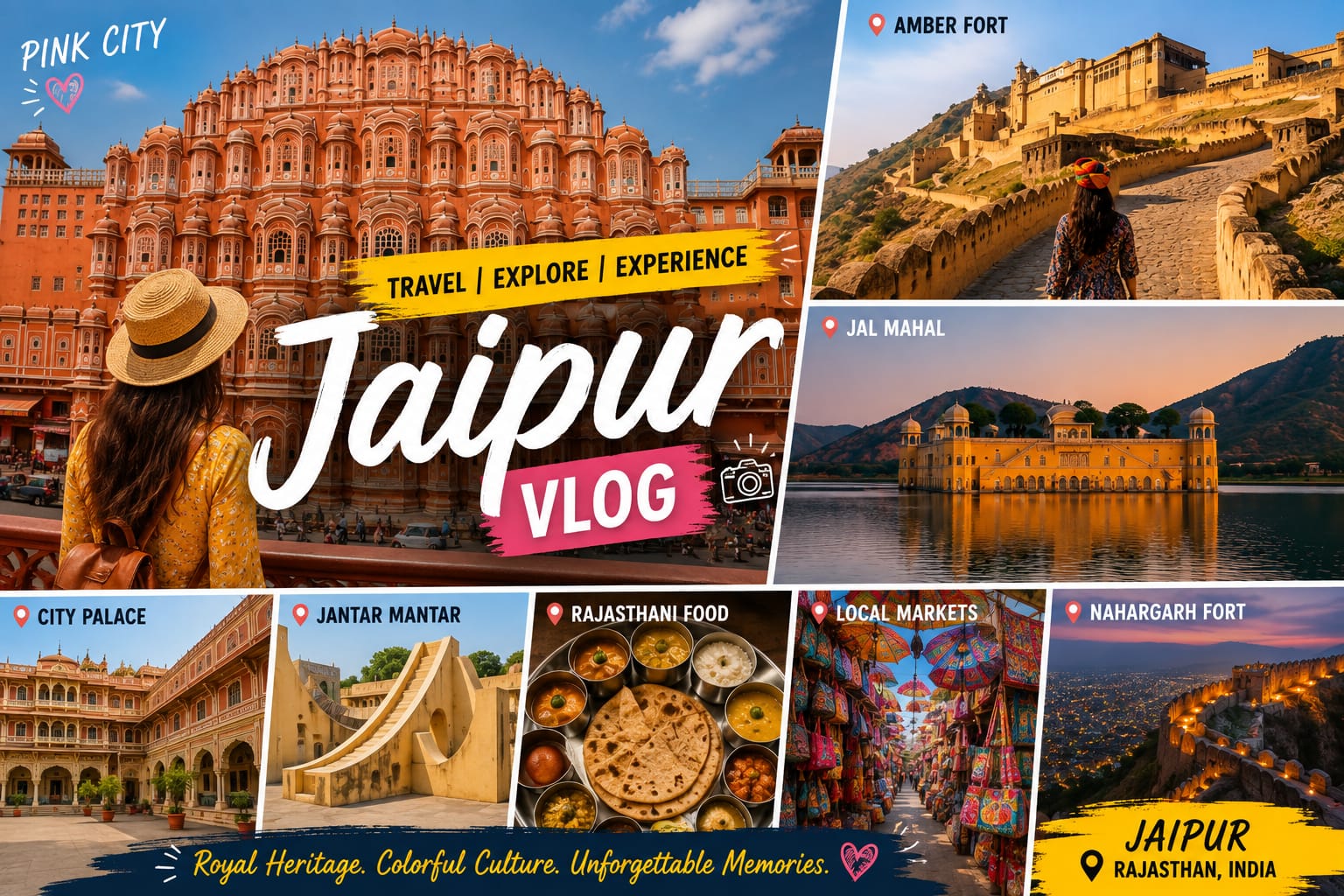
Jaipur Travel Guide – Known around the world as the Pink City, Jaipur is one of the best places to experience Rajasthan’s royal heritage, colorful markets, historic architecture, traditional food, and lively streets in a relatively compact destination.
For travelers arriving in India for the first time, Jaipur can also be an easy introduction to Rajasthan. The city combines centuries-old palaces and forts with modern hotels, restaurants, cafés, shopping areas, and transportation options.
Whether you have two days or a full week, Jaipur offers plenty to explore.
Why Visit Jaipur?
Jaipur was founded in 1727 by Maharaja Sawai Jai Singh II, who moved his capital from Amber to the newly planned city. The city was designed according to principles that created a distinctive urban layout.
Today, Jaipur is one of the three destinations of India’s famous Golden Triangle, along with Delhi and Agra.
The city is particularly appealing if you enjoy:
– Historic forts and palaces
– Indian architecture and photography
– Local handicrafts and textiles
– Traditional Rajasthani cuisine
– Cultural experiences
– Museums and royal history
– Shopping in traditional markets
One of Jaipur’s greatest strengths is variety. You can spend the morning walking through a centuries-old fort, enjoy lunch at a modern restaurant, explore a traditional bazaar in the afternoon, and watch the city lights from the hills in the evening.
Jaipur Travel Guide 2026: Best Places To Visit, Tips
Amber Fort
If you visit only one major fort in Jaipur, make it Amber Fort, also called Amer Fort.
Located roughly 11 kilometers from central Jaipur, the fort sits dramatically on a hill and combines Rajput and Mughal architectural influences. Its courtyards, gateways, gardens, decorative interiors, and views across the surrounding landscape make it one of the city’s essential attractions.
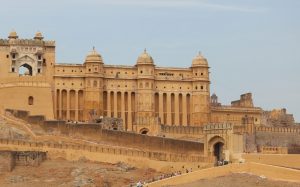
The complex includes several important areas, including the Diwan-e-Aam, royal residences, temples, courtyards, and the famous Sheesh Mahal.
Take your time here rather than treating the fort as a quick photo stop. The architecture becomes much more interesting when you notice the details in the walls, ceilings, windows, and courtyards.
Travel tip: Visit earlier in the day when possible. Rajasthan’s sun can be intense, particularly during the warmer months. read more….
Hawa Mahal – The Palace of Winds
Hawa Mahal is probably the building most closely associated with Jaipur.
Its distinctive pink façade contains numerous small windows and decorative openings, creating the appearance of a delicate honeycomb. The structure was built in 1799 during the reign of Sawai Pratap Singh.
The design allowed women of the royal household to observe life on the streets without being easily seen from outside.
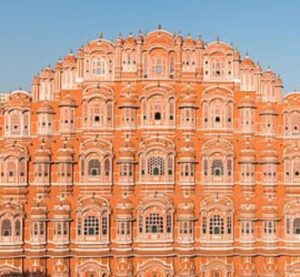
The building is especially attractive in the morning when sunlight illuminates its pink sandstone façade.
For photographers, the area around Hawa Mahal is one of Jaipur’s most recognizable urban scenes.
Don’t simply take one photograph and leave. Look around the surrounding streets and markets to experience the atmosphere of the old city. Read More….
City Palace
Located inside Jaipur’s historic walled city, City Palace offers a closer look at the lifestyle and culture of Jaipur’s former royal household.
The complex contains courtyards, gateways, museums, royal clothing, decorative objects, paintings, and historic weapons.
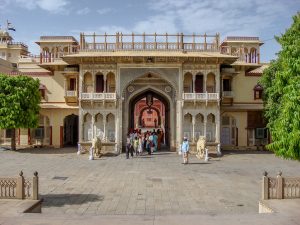
For visitors interested in history, City Palace can provide context that helps make the other Jaipur monuments more meaningful.
Allow at least a couple of hours if you want to explore the complex without rushing. read more….
Jantar Mantar
Jantar Mantar is one of Jaipur’s most unusual attractions.
Instead of another palace or fort, you will find a collection of enormous astronomical instruments built during the reign of Sawai Jai Singh II.
The site is recognized as a UNESCO World Heritage Site and contains instruments designed to measure time and observe celestial movements.

You don’t need to be an astronomy expert to enjoy the visit. The scale of the instruments alone is impressive, and a knowledgeable guide can make the science behind them much easier to understand.
If you are traveling with someone who enjoys science, mathematics, architecture, or history, don’t skip Jantar Mantar. read more…..
Jal Mahal
Jal Mahal, meaning Water Palace, appears to float in the middle of Man Sagar Lake.
The palace is one of Jaipur’s most photographed sights, particularly around sunrise and sunset.

For most visitors, the best experience is simply enjoying the view from the lakeside rather than expecting to explore the palace interior.
The combination of water, hills, sandstone architecture, and changing light makes this a worthwhile photography stop. read more…..
Nahargarh Fort
For a different perspective of Jaipur, head towards Nahargarh Fort in the Aravalli Hills.
The fort overlooks the city and is particularly attractive around sunset, when Jaipur begins to transform from a busy daytime city into a sea of lights.

The fort was originally built as part of Jaipur’s defensive landscape and was later expanded.
If you enjoy panoramic views, photography, or quieter historical locations, Nahargarh deserves a place on your itinerary. read more…..
Jaigarh Fort
Jaigarh Fort is another impressive hilltop attraction near Amber.
Unlike the ornate interiors of some Jaipur palaces, Jaigarh has a stronger military character. Its massive walls, gateways, courtyards, and elevated location give visitors a sense of how the region’s historic defenses were organized.
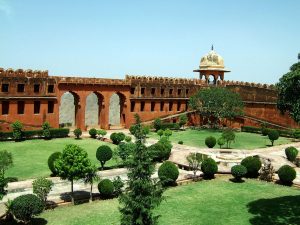
It can easily be combined with a visit to Amber Fort because of their proximity. read more…..
Albert Hall Museum
If you want to escape the heat for a while and explore Rajasthan’s artistic heritage, consider visiting Albert Hall Museum.
Located in Ram Niwas Garden, the museum houses collections covering art, crafts, sculptures, textiles, weapons, and other historical objects.
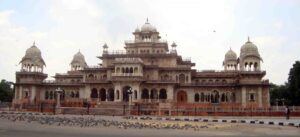
The building itself is also worth seeing. Its Indo-Saracenic architectural character makes it an important landmark in Jaipur. read more…..
What to Eat in Jaipur
A trip to Jaipur is incomplete without trying some local Rajasthani food.
Depending on your preferences, look for dishes such as:
– Dal Baati Churma
– Gatte ki Sabzi
– Ker Sangri
– Bajra Roti
– Laal Maas
– Kachori
– Ghewar
– Traditional Rajasthani thali
If you are visiting India for the first time, remember that Indian food can vary considerably in spice level.
When ordering, simply tell the restaurant that you prefer mild or medium spice.
Trying local food is part of the Jaipur experience, but you don’t have to eat something extremely spicy to enjoy Rajasthani cuisine.
Shopping in Jaipur
Jaipur is famous for traditional crafts, textiles, jewelry, pottery, decorative items, and colorful fabrics.
Popular shopping areas include the historic markets around the old city.
You may come across:
– Block-printed textiles
– Blue pottery
– Handicrafts
– Traditional clothing
– Rajasthani artwork
– Decorative home items
– Jewelry and gemstones
If you are buying expensive items such as gemstones or jewelry, research the product carefully and purchase from a reputable seller.
For ordinary souvenirs, however, Jaipur’s markets are a fun place to browse, compare prices, and experience local life.
Don’t feel pressured to buy the first thing you see.
How Many Days Do You Need in Jaipur?
For a first visit, two full days can cover many of Jaipur’s major attractions.
A Simple 2-Day Jaipur Itinerary
Day 1 – The Royal Jaipur
Start with Amber Fort in the morning.
After exploring the fort, continue towards Jaigarh Fort if you have enough time.
Return towards the city and stop at Jal Mahal for photographs.
In the afternoon, explore City Palace and Jantar Mantar.
Finish the day around the old city and Hawa Mahal.
Day 2 – Culture, Markets and City Views
Begin with Hawa Mahal and explore the surrounding historic streets.
Visit Albert Hall Museum later in the morning.
Spend some time shopping for local crafts and textiles.
Take a break during the hottest part of the afternoon.
In the evening, head towards Nahargarh for panoramic views if conditions and access allow.
This itinerary can be adjusted depending on your interests and the opening hours of individual attractions.
Jaipur Travel Guide 2026: Best Time To Visit, Tips
For many international travelers, the cooler months are the most comfortable time to explore Jaipur.
Rajasthan Tourism identifies winter as a particularly favorable travel season, while summer can become extremely hot. Official Rajasthan tourism information lists typical January–March temperatures around 10°C–27°C, while April–June can reach approximately 24°C–45°C across Rajasthan.
October to March
This is generally the most comfortable period for sightseeing.
Days are usually pleasant, although winter mornings and evenings can feel surprisingly cool.
April to June
Summer can be very hot.
If you travel during this period, plan outdoor sightseeing for the morning and later afternoon and take regular breaks.
July to September
The monsoon can bring rain and somewhat cooler temperatures.
The landscape can become greener, and travelers looking for a different atmosphere may enjoy visiting during this season.
Weather can change, so check current conditions before planning your daily sightseeing.
Getting Around Jaipur
Jaipur is a large modern city, but many major attractions are relatively easy to connect by road.
Common options include:
Auto-rickshaws:
Useful for short journeys and an authentic way to experience the city.
Taxis and app-based cabs:
Often more comfortable for travelers visiting multiple attractions in one day.
Private car with driver:
Can be convenient if you want to visit Amber, Jaigarh, Nahargarh, Jal Mahal, and central Jaipur in a single itinerary.
Public transport:
Jaipur also has public transportation options, although visitors with limited time may find point-to-point transportation more convenient.
Before starting a journey, confirm the fare or booking details.
Jaipur Travel Tips for First-Time International Visitors
Start your sightseeing early – Jaipur Travel Guide 2026: Best Places To Visit, Tips
Many attractions are more enjoyable before the strongest afternoon heat.
- Carry water
Staying hydrated is particularly important during warmer months.
- Dress comfortably
Light, breathable clothing is useful for Jaipur’s climate. When visiting religious or culturally sensitive places, modest clothing is a respectful choice.
- Wear comfortable shoes
Historic forts and palaces involve walking, steps, uneven surfaces, and sometimes steep sections.
- Don’t try to see everything
Jaipur has more attractions than you can comfortably cover in one rushed day.
Choose a few major sights and actually enjoy them.
- Keep some flexibility
Traffic, weather, crowds, and attraction schedules can change your plans.
A flexible itinerary usually makes for a better holiday.
- Be careful with expensive purchases
If you’re buying jewelry, gemstones, antiques, or expensive handicrafts, use established sellers and request appropriate documentation where relevant.
Is Jaipur Good for a First Trip to India?
For many international travelers, Jaipur can be an excellent introduction to northern India.
The city provides a strong combination of history, architecture, food, shopping, and culture without requiring you to travel long distances between every attraction.
It also works particularly well as part of a larger itinerary.
A classic route is:
Delhi → Agra → Jaipur
After Jaipur, travelers can continue towards destinations such as Jodhpur, Udaipur, Pushkar, or Jaisalmer depending on how much time they have.
If you have only a few days in Rajasthan, Jaipur gives you a concentrated introduction to the state’s royal heritage.
How Much Time Should You Spend in Jaipur?
2 days: Good for the major highlights.
3 days: Better for a relaxed first visit.
4–5 days: Ideal if you want to combine major monuments with shopping, museums, food experiences, photography, and slower exploration.
If you’re traveling from the United States, remember that the journey to India itself can be long. Adding an extra day to Jaipur can therefore be worthwhile rather than trying to rush through every attraction.
Frequently Asked Questions
What is Jaipur famous for?
Jaipur is famous for its historic forts, palaces, pink-colored architecture, traditional markets, handicrafts, jewelry, and Rajasthani culture.
Why is Jaipur called the Pink City?
Jaipur became associated with its distinctive pink color after parts of the city were painted pink in the nineteenth century as a symbol of hospitality.
Is two days enough for Jaipur?
Yes. Two well-planned days are enough to visit many of the city’s major attractions. Three days will allow a more relaxed experience.
What is the most famous place in Jaipur?
Hawa Mahal is perhaps Jaipur’s most recognizable landmark, while Amber Fort is one of its most important historical attractions.
Is Amber Fort far from Jaipur?
Amber Fort is approximately 11 kilometers from central Jaipur.
What should I buy in Jaipur?
Popular choices include textiles, block-printed fabrics, handicrafts, blue pottery, traditional artwork, and selected jewelry.
When is Jaipur most comfortable to visit?
The cooler months are generally the most comfortable for sightseeing. Rajasthan Tourism describes winter as a favorable season for visiting the state.

My self Dev Satish. I’m an Author and Founder of tourism-rajasthan.com. I’m from Rajasthan and If I talk about my Education then I’m Law Graduate. I love doing work that makes me happy, that’s why I love traveling. you will find Rajasthan travel ideas & tips on this blog.